Fruit and Your Body Type: Why the Sugar Number Is Not the Thing That Matters
Published:
MOMS Team
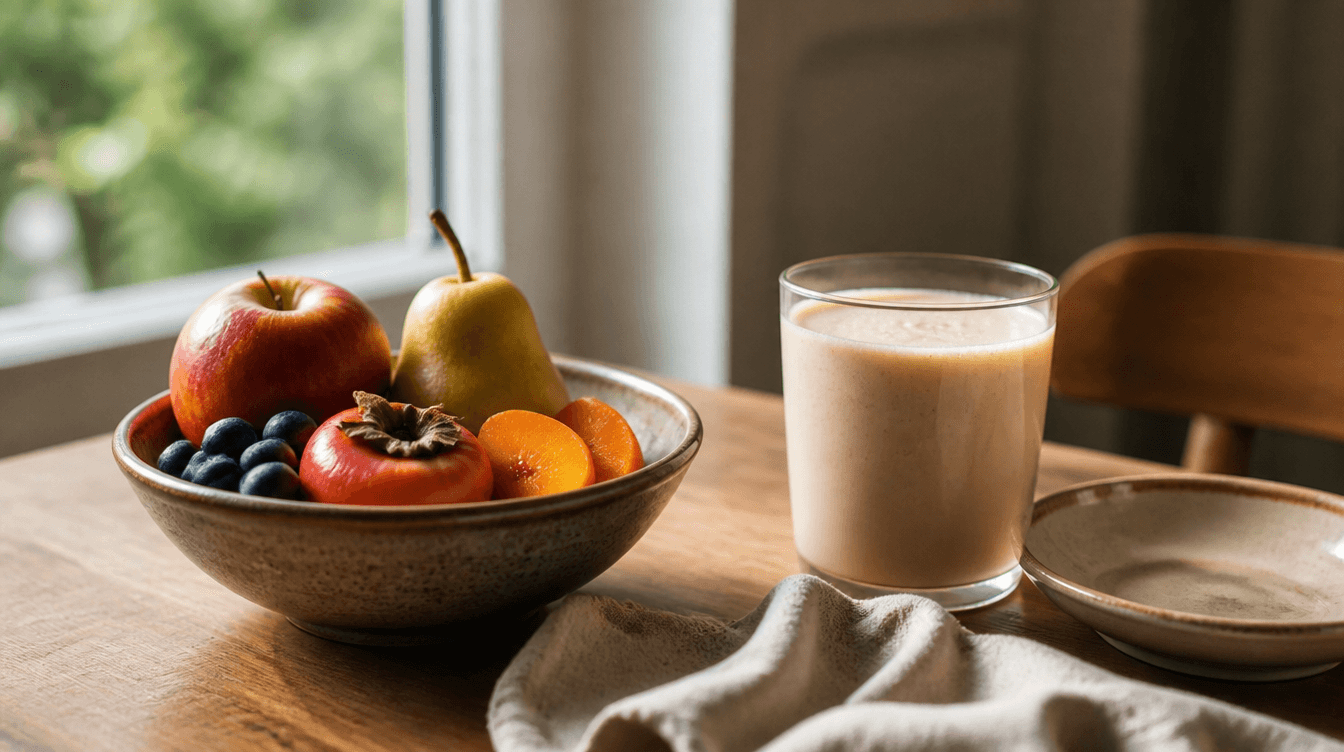
A medium apple has about 19 grams of sugar. A cup of blueberries has about 15. If sugar were the variable that mattered, those two snacks should land in your body almost identically. For a lot of people they do not. One leaves you clear and steady, the other sits oddly heavy, and the same person who swears by berries can find an apple far easier than a friend does. The sugar number was never wrong. It just was not the thing doing the sorting.
Sugar is a label, not a sorting rule
Line up whole fruit and the numbers cluster tightly. Apples, pears, peaches, oranges and berries mostly land somewhere between roughly 8 and 15 grams of sugar per 100 grams, which is a narrow enough band that it cannot explain why one of them agrees with you and another does not. Sugar content is a real number and a useful one, but as a way of choosing between whole fruits it is far too blunt an instrument. Where it does start to matter is when the water and fiber come out, because dried fruit and juice pack the same grams into a fraction of the volume. That is a story about form, though, not about which fruit.
The variable that is actually doing the work
In the 8-constitution tradition of Korean medicine that the 8 body types come from, foods are sorted less by what they contain and more by what they do to you: whether they warm or cool, whether they are easy or demanding on digestion, and how quickly they move through. On that axis, a pear eaten cold from the fridge and the same pear gently poached with a little ginger are two genuinely different foods, even though the nutrition label would not budge between them. Temperature and preparation are variables your body answers immediately, and they are the ones most people never think to change.
Why the same fruit lands differently across the eight types
The eight types are four elements, Wood, Earth, Metal and Water, each with a yang side and a yin side. Wood types, both Wood+ and Wood-, generally do better leaning warm, and cold raw plates tend to sit heavily, so fruit straight from the fridge on an empty stomach is often the version of fruit that does not work for them. Water types are the most temperature-sensitive of the eight, and for both Water+ and Water- a baked apple or a warm poached pear can feel comfortable when the same fruit raw and chilled does not. Earth and Metal each carry their own tilt, which is exactly the point: there is no single list of good and bad fruit that applies to everybody.
Small adjustments that make fruit easier on almost any constitution
Let fruit come up to room temperature instead of eating it straight from the fridge, which costs you nothing and changes how it feels more than most people expect. Choose whole over juiced, since the water and the fiber are most of what makes fruit filling in the first place. Give it company rather than sending it in alone on an empty stomach, whether that is a handful of nuts, some yogurt or a protein shake alongside it. And if your digestion runs cool, move fruit earlier in the day rather than late at night, when a cold snack is hardest to handle.
A one-week way to find your own pattern
Pick one fruit you already eat often and run it two ways across a week. Three days cold and raw on its own, three days at room temperature or gently cooked and eaten alongside some protein. Sixty to ninety minutes later, write one line about how your energy and digestion feel. No scoring, no judgement, just the note. Most people find the difference is not subtle, and that a single week of paying attention tells them more about their constitution than any grams-of-sugar count ever did. None of this is about eating less fruit. It is about eating it in the form your body actually handles well.
Curious which of the eight you are, and which foods suit your constitution? Take the free MOMS Plan body type quiz and get a shake plan matched to your body type.