Nuts and Seeds by Body Type: Why the Same Handful Suits One Person and Not Another
Published:
MOMS Team
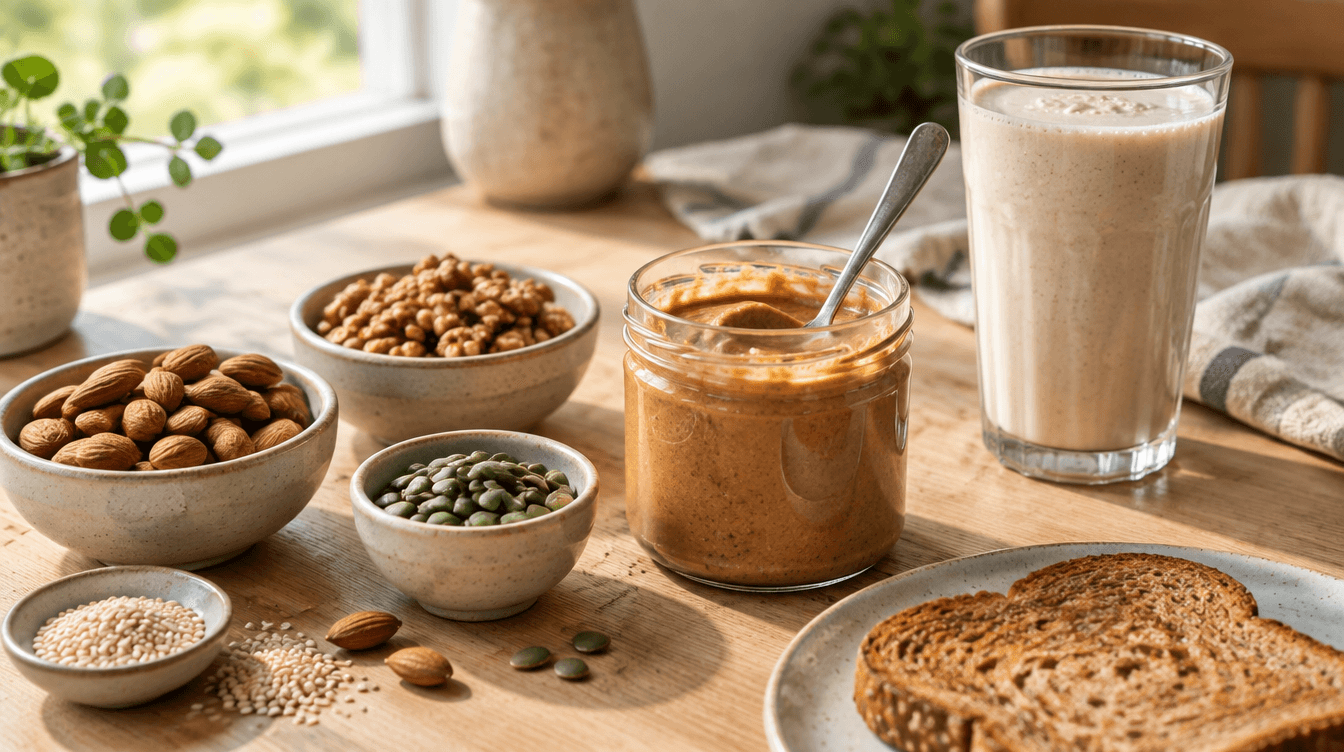
A tablespoon of almond butter is about a dozen almonds. Most people spread two or three tablespoons on a slice of toast without thinking about it, which puts something like thirty almonds on that piece of bread in under a minute. Almost nobody sits down and chews thirty almonds as a snack. It takes real time and real jaw work, and most people stop somewhere around fifteen. Nothing was added to the jar and nothing went wrong. What the grinding removed was the chewing, and the chewing was most of what told you when to stop. That is useful to know on its own, but in the 8 body types there is a second question sitting underneath it, and it matters more: nuts and seeds do not suit every constitution equally, and knowing which ones suit yours changes the answer far more than the portion size does.
What grinding a nut actually takes away
There is a physical reason whole nuts and nut butter behave so differently. The fat in an almond sits inside intact plant cell walls, and chewing does not fully break them open, so a measurable share of it travels through you without ever being absorbed. Grind those same almonds into a smooth butter and much more of that fat becomes available. Add the fact that a spoon delivers in seconds what a jaw needs several minutes to work through, and you have two separate effects pointing in the same direction. None of this makes nut butter a bad food. It simply means whole nuts and nut butter are not interchangeable, and the version that leaves you satisfied is usually the one that made you work for it.
Nuts and seeds are not one category
The other thing worth unlearning is the idea that nuts are a single food with a single verdict. Walnuts, almonds, peanuts, and chestnuts are rich and warming. Sesame is concentrated and oily in a different way. Pumpkin and sunflower seeds are lighter on the system than any of them. In Eastern constitutional thinking, foods are not sorted by how impressive their nutrition label looks but by what they do to a particular person, given which organ systems in that person already run strong and which run sensitive. That is why the useful question is never quite whether nuts are healthy. It is healthy for whom, in what form, and how much.
The constitutions that tend to get along with nuts
Wood types, both Wood+ (목양) and Wood- (목음), generally do well here. This is the constitution built around a strong liver-and-gallbladder system that thrives on hearty, warming, protein-forward food, and nuts fit that pattern comfortably. Walnuts, almonds, and chestnuts tend to sit well, especially eaten with or after a warm meal rather than as a cold handful at ten at night. Water types, Water+ (수양) and Water- (수음), can do well with nuts too, but the form matters more than it does for anyone else. Water runs on a slow, steady, easily chilled digestion, so a small portion of warm or lightly roasted nuts alongside a cooked meal works, while a large cold scoop late in the evening is exactly the sort of thing this constitution reports back about the next morning.
The constitutions that usually do better going lighter
Metal types, Metal+ (금양) and Metal- (금음), are the clearest contrast. Metal does best on a light, plant-forward plate built around greens, rice, and lighter proteins, and in traditional constitutional guidance nuts are grouped with the richer foods this type is advised to ease off, alongside red meat and heavy dairy. That is not a ban on ever eating an almond. It does mean that if you lean Metal and you have noticed a heavy, dragging feeling, restless skin, or vague off days after a week of nut butter breakfasts, that is precisely the fast feedback Metal is known for, and a spoonful of seeds will usually sit better than a jar of nut butter. Earth types, Earth+ (토양) and Earth- (토음), run warm to begin with, so the issue is less the nut and more what has been done to it. Heavily roasted, salted, honey-glazed, or chili-coated nuts are both heating and rich, which is the combination Earth handles worst. Plain nuts or seeds in a modest amount, eaten alongside fresh and cooling foods rather than instead of them, are a much easier fit.
How to find out where you actually land
None of this needs to become a rule you follow anxiously. Give it two weeks and pay attention instead of counting. Keep nuts mostly whole, eat them with a meal rather than standing at the counter, and notice how you feel two hours later rather than two minutes later. Steady energy and comfortable digestion mean your version is working. Heaviness, bloating, or an afternoon that falls apart means it is worth trying a lighter form or a smaller amount. And on days when you want protein without the guessing, a clean, simple shake does that job in a form your constitution can handle, which is the whole point of matching food to the body eating it rather than to the label on the package.
Not sure which of the eight you are? Take the free MOMS Plan body type quiz and get a shake plan matched to your constitution.