Protein Shakes for Weight Loss: What Actually Works, by Body Type
Published:
MOMS Team
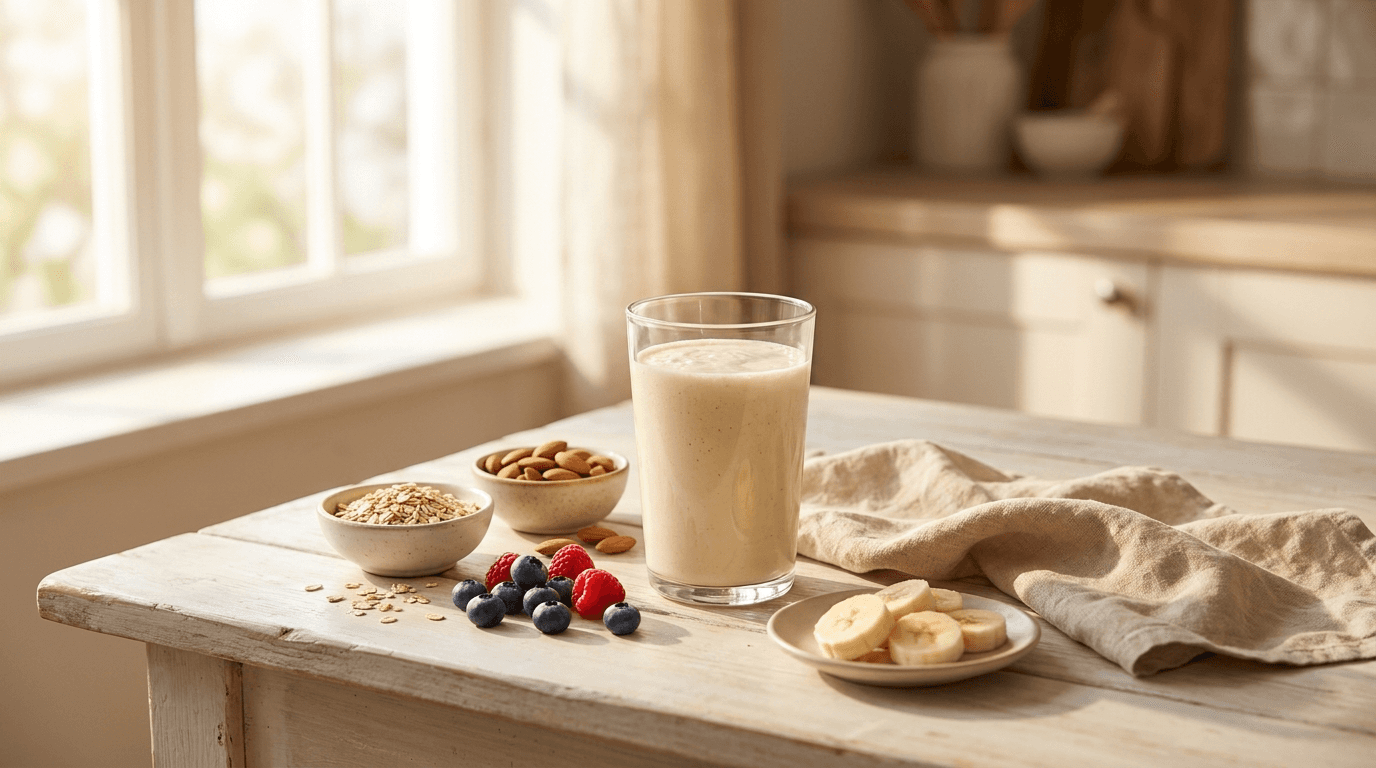
Protein shakes have a reputation problem. Depending on who you ask, they are either the easiest upgrade you can make to your day or a shortcut that does not really work. The truth is less dramatic than either version: a protein shake is a tool, and like any tool, the results depend on how it fits into the rest of your life, and on the body using it. Two people can drink the exact same shake every morning and end up in very different places, which is exactly the puzzle the 8 body types were built to explain.
Why protein shakes help in the first place
The mechanism is not mysterious. Protein is the most filling of the three macronutrients, so a meal built around it tends to keep you satisfied longer than the same number of calories from refined carbs. That matters, because most of the eating people later regret is not planned. It happens in the gap between a meal that did not hold and the next one.
Protein also protects lean muscle. When you are eating a little lighter overall, your body will happily pull from muscle as well as fat unless you give it enough protein to work with. Muscle is metabolically expensive tissue, so keeping it is one of the quieter reasons some people maintain their results and others slowly drift back.
The third benefit is the least glamorous and probably the most important: a shake removes a decision. It replaces the meal you were most likely to skip, rush, or improvise badly with something consistent. Consistency, not intensity, is what actually moves the needle over months.
Where most shake plans go wrong
The most common mistake is treating a shake as subtraction rather than substitution. If a shake replaces a real meal but leaves you under-fed, your body notices, and the correction usually arrives that evening in a form you did not choose. Shakes work best when they are a genuine meal, with enough protein and enough substance to carry you to the next one, not a way to eat as little as possible.
The second mistake is ingredients. Plenty of shakes marketed for weight loss are built on added sugars, thickeners, and long ingredient lists that leave you hungry an hour later. A shake that spikes and crashes you is not doing the job a shake is supposed to do.
The third is impatience. A week is not a signal. Bodies change slowly, weight fluctuates for a dozen reasons that have nothing to do with fat, and the people who get somewhere are almost always the ones who kept a modest routine going long past the point where it stopped feeling exciting.
What changes when you factor in your body type
Here is where the standard advice runs out. In the 8 body types framework, built from Wood, Earth, Metal and Water, each with a plus and a minus side, constitutions differ in how they handle temperature, volume and timing. Those three variables change how well the same shake lands.
Temperature is the big one. Water types in particular tend to have a digestion that slows when cold arrives, so an ice-blended shake first thing in the morning can leave them feeling heavy and sluggish rather than light. The same shake at room temperature, or gently warmed, often lands completely differently. Types that run warmer generally have more latitude here.
Volume matters nearly as much. Some constitutions do best with two or three substantial meals, while others, Water- especially, do far better with smaller amounts more often. If your body is in the second group, one enormous shake is the wrong shape for you even if the ingredients are perfect. Splitting it, or pairing a smaller shake with a bit of real food, works better than forcing the standard format.
Timing is the third lever. Constitutions that fade in the late afternoon benefit from putting protein there. Ones that wake up with no appetite are usually better served by a light morning shake than by skipping breakfast and overcorrecting at lunch. None of this is exotic. It is just paying attention to which pattern is yours instead of copying someone whose pattern is different.
Building a routine you can actually keep
Start with one meal, not all of them. Pick the meal that is currently the weakest link, the one you skip, or eat standing up, or grab on the way out, and make that the shake. Leave the rest of your eating alone at first.
Then get the basics right around it. Enough protein across the day, real food at your other meals, sleep you are not constantly borrowing against, and movement you do not dread. A shake is a good anchor, not a whole plan, and it works best when the rest of the day is not fighting it.
And give it a season, not a week. Watch how you feel at the two-hour mark after each shake. Steady and clear is the signal you want. Heavy, foggy, or hungry again is your body telling you something about temperature, portion, or timing, which is usually a body type question rather than a willpower one.
Not sure which of the eight you are? Take the free MOMS Plan body type quiz and get a shake plan matched to your constitution.